
pH
pH affects chlorine disinfection chemistry and the water environment. A dedicated pH channel supports controlled correction. Select a sensor and sample arrangement that operators can inspect, clean and calibrate.
Connect water quality monitoring, automatic chemical dosing and centralized control in one integrated solution.
Equipment supply, system selection and project coordination for hotel engineers, pool contractors and facility managers.
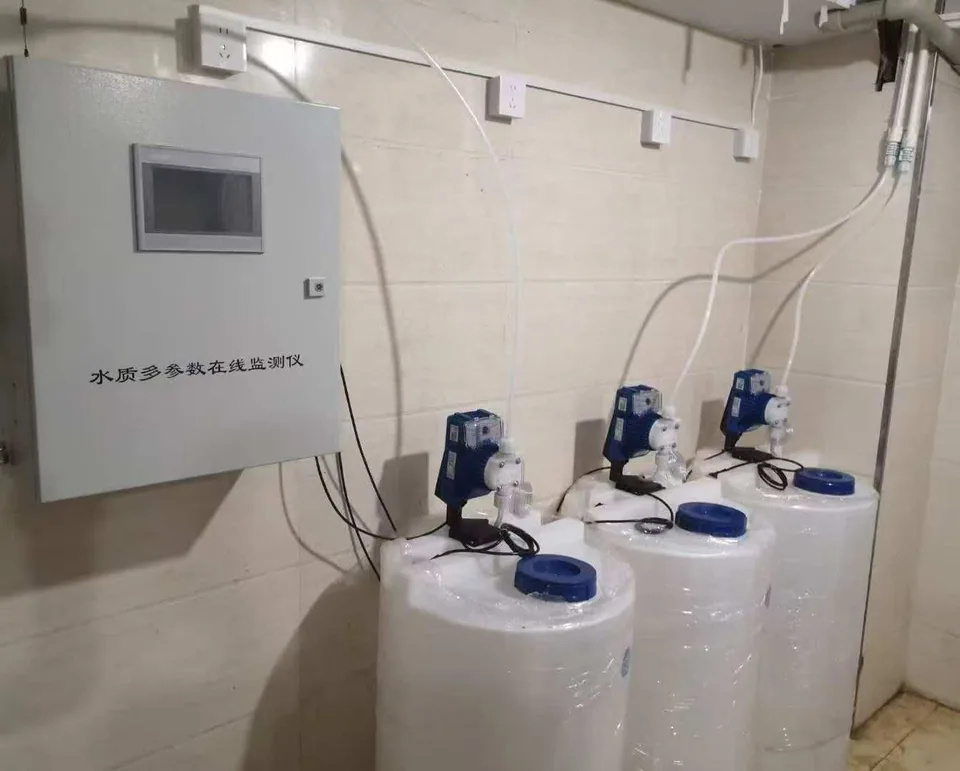
Bather load, sunlight, make-up water and operating schedules change a pool’s treatment demand. A fixed chemical feed setting may not follow those changes. Delayed adjustments can leave operators correcting swings instead of maintaining a stable process.
A commercial pool dosing system connects representative measurements to metering pumps. Automatic control supports consistent operation, but still needs independent water tests, sensor maintenance and clear operator procedures.
Hotels and resorts need visibility across guest pools with different schedules. Water parks may have multiple independent circuits and rapidly changing loads. Clubs and schools need controls aligned with supervised operating hours.
For other commercial pools, identify each separate circulation circuit before selecting shared or dedicated monitoring. One reading should not be assumed to represent pools with different water conditions.
A feedback loop links the measured water condition to a controlled chemical response.
A sampling panel delivers water to the sensors under suitable flow conditions. The controller compares valid measurements with agreed setpoints and sends dosing commands to compatible pumps. Chemicals travel from separate tanks through their pumps to the designed injection points.
Water then circulates and mixes before the effect is measured again. Sampling delay and mixing time matter: excessive dosing before a representative response returns can cause overshoot. Loss of circulation, loss of sample flow or an instrument fault should trigger the agreed inhibition and alarm logic.
pH affects chlorine disinfection chemistry and the water environment. A dedicated pH channel supports controlled correction. Select a sensor and sample arrangement that operators can inspect, clean and calibrate.
A pool pH ORP controller can track oxidation-reduction conditions alongside pH. ORP is measured in millivolts, not chlorine concentration. Its relationship to chlorine changes with water chemistry; there is no universal conversion to a free chlorine reading.
Direct free chlorine measurement supports residual-based control where specified. Temperature provides operating context and compensation where supported by the selected instrument. Confirm measurement range, sample conditions and verification method before selection.
APURE instruments, HAOSH metering pumps and KUOSI dosing equipment can form part of an application-selected arrangement.
Provide representative sampling, suitable flow regulation and access for sensor maintenance. Confirm instrument inputs and the flow conditions required for reliable readings.
Match outputs to pump inputs. Define dosing limits, delays, high/low alarms and permissives. Agree how operators acknowledge faults and return the system to service.
Review chemical compatibility, discharge pressure, suction conditions and tank level signals. Keep incompatible chemicals separated and have injection spacing, backflow protection and containment designed for the installation.
Optional remote monitoring can expose readings and alarms to the facility team. Confirm supported protocols and network access before specifying BMS integration. An on-site sodium hypochlorite generator can also be evaluated as the disinfectant supply source.
Send values for each circulation circuit, with drawings or equipment photos where available. Include units with chlorine targets and identify the chemical concentration. Unknown values can be marked for review.
Pool volume alone cannot determine a pump size. Selection also considers peak demand, injection pressure, chemical strength, operating hours and the pump’s controllable dosing range.
Automatic chemical feeding is one part of the overall pool design. The contractor should coordinate circulation, monitoring, chemical handling and equipment documentation with the project consultant.
Read the Dubai commercial pool dosing requirements guide ↗ The supplied photograph shows a physical dosing arrangement. It illustrates equipment layout; the customer, location, operating measurements and project results have not been verified.
For a proposed hotel-pool retrofit, review the existing circulation line, sampling access and injection points first. Then identify which measurements, pump interfaces and interlocks can be retained and which require replacement. Confirm maintenance access before selecting the final cabinet or skid arrangement.
This is an illustrative planning example, not a completed customer case or a performance claim.
Project case documentation ↗ORP is not a direct chlorine concentration measurement. If your specification requires residual chlorine control, review a suitable chlorine instrument, sample conditions and an independent verification method alongside pH.
Required chemical delivery at operating pressure, chemical concentration, peak treatment demand and the controllable dosing range all matter. Pool volume alone is insufficient; circulation flow and the operating profile are also reviewed.
Share the pool type, approximate volume, number of pools, circulation arrangement and current dosing method. Existing equipment photos, water quality information and control requirements help with selection.
Yes. Our scope includes equipment supply, system selection, technical support and project coordination for contractors, facility managers and system integrators.
An upgrade may be possible after reviewing circulation, sampling, dosing points, existing controls and site conditions. Compatibility is confirmed before proposing equipment.
Our stated scope is equipment supply and technical or project coordination. Installation responsibilities and any local project partners must be agreed separately.
Yes, on-site generation can be considered as an optional part of the disinfection arrangement, subject to treatment demand, available utilities and site requirements.
Share your pool parameters, current treatment method and the issue you want to solve. We will review equipment selection and interfaces before proposing the supply scope.
For an existing site, photographs of the control panel, pump nameplates and circulation layout help identify integration questions. Installation and commissioning responsibilities are agreed with your project team.
Start with the details you have. Pool volume is optional.
Online inquiries are not available yet. Please email our Dubai team or use WhatsApp to discuss your project.
Dubai — Regional Sales & Project Coordination
allen@glenvironment.com
China Operations & Technical Support
linda@glenvironment.com
A residual-based channel compares a valid free chlorine measurement with the agreed operating target and adjusts a compatible metering pump. If ORP is selected as the control input, document the site-specific control basis instead of treating millivolts as chlorine concentration. Define maximum feed limits, sampling delay and loss-of-flow inhibition.
Review pump delivery at the injection pressure, its controllable range and chemical compatibility. A pump sized only for the highest possible demand may be difficult to regulate during quiet periods.
A separate pH channel evaluates its own sensor and correction requirement. The selected chemical, materials, injection arrangement and controller action must match the engineering design. Coordinate pH correction and disinfectant dosing without allowing incompatible chemicals to mix in storage or feed lines.
Confirm stable sample flow, sensor calibration and representative mixing before tuning the loop. Read the ORP versus free chlorine guide for the role of pH in interpreting monitoring data.
Volume = length × width × average water depth. Use water dimensions in metres. For slopes, steps, irregular shapes or separate balance tanks, provide drawings for a more accurate assessment.
This estimates water volume only. It does not calculate chemical dosage or select a dosing pump. Circulation flow and treatment demand must be reviewed separately.
A practical pool dosing selection checklist: circulation, chlorine demand, sensors, pumps, interlocks, BMS interfaces and the information needed for a quote.
Understand what ORP and free chlorine measure, why readings differ, and how to choose and verify monitoring for a commercial swimming pool.
Plan hotel and resort pool dosing around peak bather load, separate pools and spas, BMS signals, operator checks and practical retrofit requirements.
Coordinate dosing across water park pools and attraction loops: peak loads, continuous measurements, central alarms, chemical supply and selection inputs.
Review the complete pool dosing solution, monitoring equipment and Dubai pool-plan requirements before sending your project details.