
Generation equipment
Select equipment against required disinfectant output and operating schedule. Our systems produce sodium hypochlorite solution at 0.6–0.9% concentration. Output capacity is selected after technical review.
Generate disinfectant near the point of use, with generation, storage and dosing selected around your application. For continuous water treatment projects across the UAE and GCC.
Our sodium hypochlorite generation systems produce solution at 0.6–0.9% concentration for integration into a water treatment and dosing arrangement.
The equipment shown brings a generator cabinet, touchscreen interface and connected tank assembly together. Generation, storage, transfer and dosing are coordinated around your project.
Required output capacity, operating conditions and site services are reviewed during system selection.
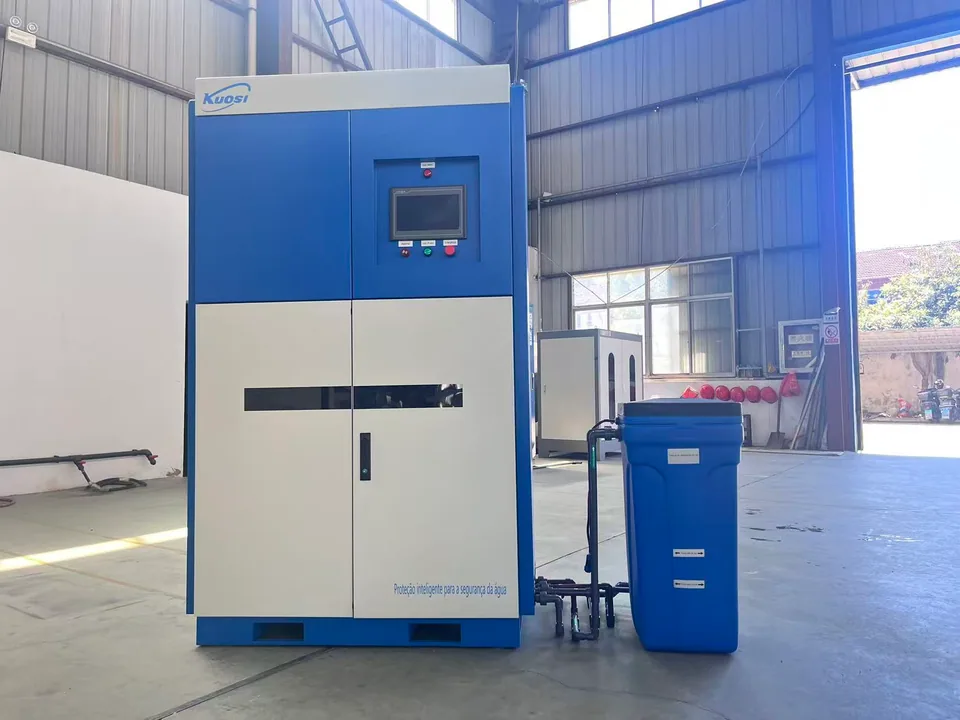
On-site generation can reduce dependence on delivered hypochlorite and bulk chemical storage. The right approach depends on disinfectant demand, site services, operating resources and project requirements.
Components are selected to work together. Final scope depends on your application and confirmed technical requirements.
Select equipment against required disinfectant output and operating schedule. Our systems produce sodium hypochlorite solution at 0.6–0.9% concentration. Output capacity is selected after technical review.
Review incoming water quality, available utilities and feed preparation requirements against the selected system specifications.
Coordinate generation with the day tank, level controls and metering pumps so the supply arrangement follows treatment demand.
Define operating signals, permissives, shutdown logic and alarms for the selected configuration.
Confirm space, ventilation, drainage, electrical services and other site requirements against the manufacturer’s approved documentation.
Align equipment supply with the contractor’s installation scope and the operator’s maintenance requirements.
Share your application and operating profile. We can coordinate a proposed generation and dosing arrangement without making assumptions about unconfirmed capacity, certification or performance.
An electrolytic system uses a prepared salt solution and electrical power to generate sodium hypochlorite. The generated solution is collected for controlled delivery to the water being treated. Generation and dosing serve different functions: the generator replenishes the supply, while metering pumps deliver the required dose.
Incoming water treatment and salt preparation depend on the selected model and feed-water analysis. Confirm salt quality, water hardness, service pressure and electrical supply against the manufacturer’s documentation. Do not assume that untreated site water or any available salt is suitable.
Hydrogen is a by-product of electrolysis. Ventilation, gas handling and associated interlocks must follow the selected equipment’s installation requirements and the site engineering design.
Functional sequence only. Piping, ventilation and electrical drawings are prepared for the selected configuration.
For residual-based disinfection control, a chlorine instrument samples representative treated water. Its controller adjusts a compatible dosing pump, subject to circulation permissives, signal validity and dosing limits. The residual measurement belongs to the treated-water circuit; it is not the generator’s product concentration measurement.
Tank level controls can coordinate generator operation with available storage. The design should address low solution level, loss of feed water, generator faults and loss of treatment flow. Allow for sample delay and mixing before adjusting the response.
Explore residual chlorine monitoring ↗For commercial pools, hotels and water parks, review the combined demand of each treatment circuit and whether peaks occur together. Identify which circuits need separate dosing control even if they share a generator.
Other water-treatment applications require their own water analysis, disinfection objective and design criteria. A pool arrangement should not be assumed suitable for drinking water or an industrial process without reviewing material, monitoring and approval requirements.
Provide normal and peak disinfectant demand, operating hours, required availability and intended storage duration. Include feed-water analysis, site temperatures, available power, space and ventilation route. If demand is unknown, share treatment flow, the current chemical concentration and consumption records so the calculation basis can be reviewed.
Our stated sodium hypochlorite solution concentration is 0.6–0.9%. The reporting basis and test method must be confirmed in the model documentation before converting this figure into available-chlorine mass output.
Output capacity, concentration basis, salt consumption, electrical consumption, feed-water limits and operating temperature range: pending the selected model’s technical datasheet.
Storage volume, duty/standby arrangement, ventilation, interfaces, maintenance intervals and applicable certifications: subject to documented technical review. No unverified certification or efficiency rating is offered here.
Possible applications include commercial pools, hotels, water parks, municipal water and industrial disinfection. Suitability is determined from site conditions and treatment requirements.
No. It can reduce bulk delivered hypochlorite storage, but feed materials and generated solution still need appropriate handling and storage arrangements.
Our systems produce sodium hypochlorite solution at 0.6–0.9% concentration. Output capacity and the operating requirements for a selected model are confirmed during application review.
Equipment supply, system selection and project coordination for UAE, Saudi Arabia and GCC customers.