
How to Select a Commercial Pool Dosing System ↗
A practical pool dosing selection checklist: circulation, chlorine demand, sensors, pumps, interlocks, BMS interfaces and the information needed for a quote.
A hotel plant room must support changing guest demand while giving the engineering team a clear view of each pool. Build the dosing scope around the actual circuits, shift responsibilities and maintenance access.
A quiet morning and a busy afternoon can place different demands on the same pool. Record opening hours, typical use, event-related peaks, outdoor exposure and make-up water arrangements. Ask the treatment designer to review peak and low-load operation rather than specifying only a maximum pump rating.
Automatic chlorine and pH control should follow valid measurements, with limits and delays matched to the circulation and sample response. Operators still need independent checks and a process for responding to alarms.
Map every water loop. A spa or Jacuzzi can have a different temperature, volume and operating pattern from the main pool; readings from the main pool should not be used as a substitute for its own conditions.
A shared chemical supply may be evaluated, but each independent loop still needs an appropriate measurement and dosing decision. Identify dedicated pumps, isolation, chemical lines and tank-level signals in the equipment schedule.
Define the actual screen and alarm requirements before selecting an interface: measured pH and chlorine, sample-flow condition, chemical levels, pump status and faults where supported. Separate read-only monitoring from any permitted remote command.
Confirm the selected controller’s protocol, the required register or signal list and who supplies the BMS gateway and programming. Keep local inhibition effective if communications fail. Internet access and remote assistance require an agreed site policy; neither is automatically included.
Accessible sensors, labelled chemical lines and clear fault messages make routine work easier. Include calibration, cleaning, independent testing and chemical replenishment in the operating plan. Decide which spare parts and consumables must be available to the team.
Set out who receives alarms overnight and who is authorized to reset an inhibited dosing channel. Trend review can help identify recurring sampling or demand problems, but it does not replace a trained operator’s response.
Start with photographs and nameplates of the controller, pumps, sensors and tanks. Check retained equipment for condition, pressure rating, chemical compatibility and supported signals. Reserve time for documented commissioning checks with the hotel engineering team.
GLENVIRONMENT WATER SOLUTIONS - FZCO provides regional sales and project coordination from Dubai. China Operations & Technical Support supports product selection and manufacturing coordination. Installation and on-site commissioning responsibilities must be agreed separately; no local installation team or unverified hotel reference is claimed.
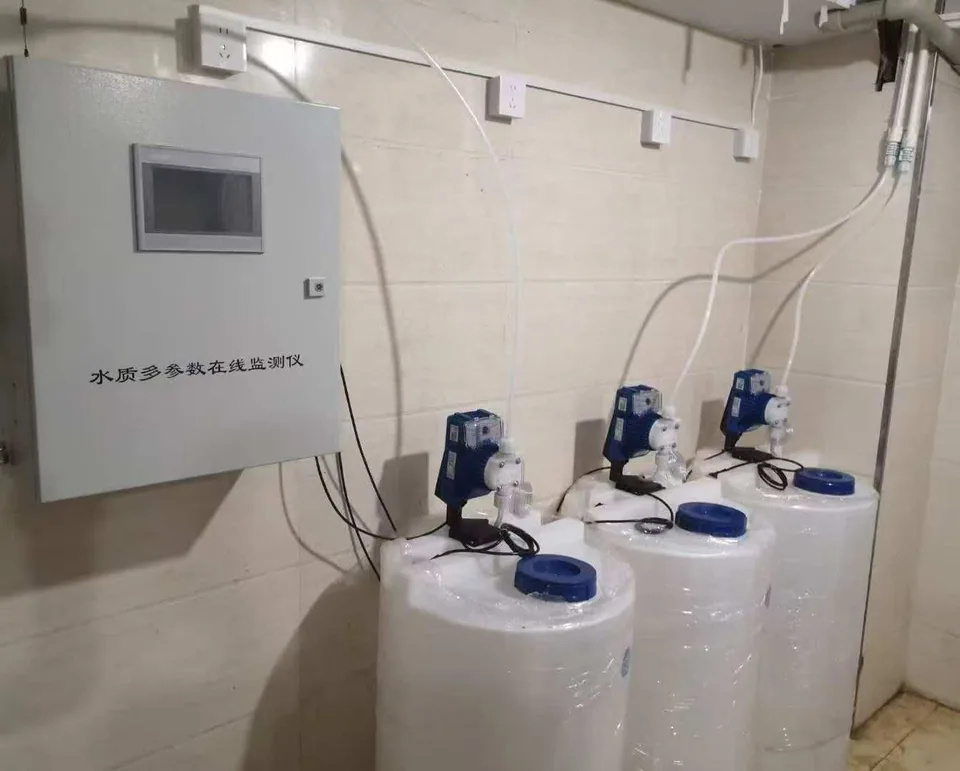
This supplied equipment photograph illustrates a cabinet, dosing pumps and tanks. It is not presented as a verified hotel or water park reference. Use your plant-room layout and circuit schedule to define the actual configuration.
A practical pool dosing selection checklist: circulation, chlorine demand, sensors, pumps, interlocks, BMS interfaces and the information needed for a quote.
Understand what ORP and free chlorine measure, why readings differ, and how to choose and verify monitoring for a commercial swimming pool.
Coordinate dosing across water park pools and attraction loops: peak loads, continuous measurements, central alarms, chemical supply and selection inputs.
Review the complete pool dosing solution, monitoring equipment and Dubai pool-plan requirements before sending your project details.
Only where its supported channels and the hydraulic/control design suit the actual loops. Do not use one pool reading to represent independent pools or a spa.
Possibly. Their condition, chemical compatibility, delivery at pressure and control inputs need to be checked first.
Send a circuit list, volumes and flows, operating schedule, current chemicals, equipment photographs and the BMS signal requirements.